)
)
Shaping Insurance 2.0: Founders Forum - Embedded Insurance & MGA Innovation
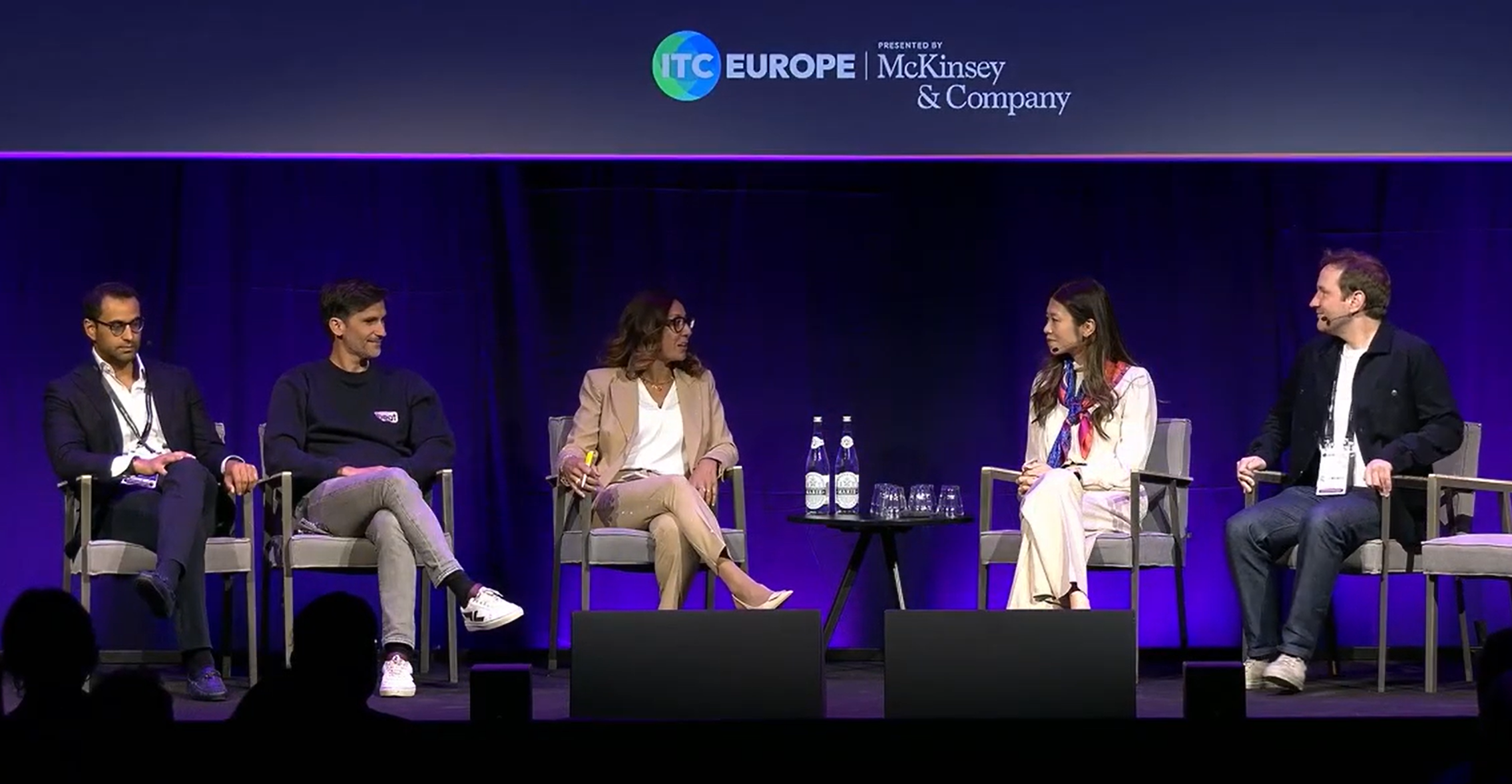
- Event: ITC Europe 2025
- Date: 25 May 2025
- Speakers: Ambra Zhang (Juniper), Karan Mehta (Blueberry Life), Fabien Cazes (NEAT Protect), Jens Hartwig (Laka)
- Estimated read time: 5-6 minutes
At ITC Europe 2025, four startup founders shared how innovation, empathy, and technology are changing the insurance industry. Their discussion explored the growth of embedded insurance, MGA models, and digital tools that improve customer experience, risk assessment, and claims management.
Covering areas such as reproductive health, chronic illness, and micro mobility, the panel showed how new businesses are rethinking coverage, regulation, and trust, helping the industry become more connected, inclusive, and customer focused.
Reimagining Insurance from the Ground Up
At ITC Europe 2025, four startup founders explored how technology, empathy, and innovation are transforming the insurance industry.
Under the theme “Shaping Insurance 2.0” the panel examined how new entrants are rethinking insurance coverage, customer experience, and risk assessment across the financial services landscape. From reproductive health to chronic illness, embedded insurance, and collective protection models, the speakers showed how digital ecosystems and customer centric design are redefining what protection means, and how it’s delivered.
Turning Personal Pain into PurposeEach founder began their business after experiencing a real world gap in customer coverage or an overlooked life event that traditional insurers ignored.
Ambra Zhang – Juniper
Zhang’s diagnosis with PCOS revealed how reproductive health was excluded from conventional policies. Juniper was created to fill that void, an MGA model focused on women’s and reproductive wellbeing. The company integrates prevention into pricing, aligning risk profiles and regulatory requirements while offering protection that reflects modern lifestyles and medical realities.
Karan Mehta – Blueberry Life
A former NHS doctor, Mehta saw how difficult it was for people with chronic illnesses to navigate the customer journey of buying life insurance. Blueberry Life introduced a “longevity subscription” model that rewards better health over time, turning insurance into a form of customer engagement and loyalty rather than exclusion. “We’re helping people take ownership of their wellbeing while staying financially protected,” he explained.
Fabien Cazes – NEAT Protect
After 15 years inside traditional carriers, Cazes recognised that the insurance value chain had barely evolved. NEAT Protect now delivers transparent, embedded protection across multiple sectors, from consumer electronics to travel, with claims management powered by automation and digital channels. “Your credit card insurance still looks like your parents’ policy” he noted. “It was time to make coverage fit the digital era.”
Jens Hartwig – Laka
Hartwig’s company, Laka, was founded on fairness. Its collective model spreads costs evenly across members and only earns when claims are handled successfully. Built within a connected digital ecosystem, Laka partners with insurance distributors like Decathlon and Cannondale, embedding protection directly at the point of purchase.
Working with the Establishment
Collaboration between startups and established carriers remains vital for industry growth, yet it’s often challenging.
Startups bring agility, data driven insight, and fresh thinking; incumbents bring regulatory compliance, underwriting expertise, and global scale. The discussion highlighted how both sides can coexist within a rapidly evolving financial services environment.
-
Karan Mehta stressed that credibility matters: “You have to show insurers you understand a customer segment they can’t reach without you.”
-
Ambra Zhang explained that Juniper’s MGA model acts as a bridge between innovation and regulatory requirements, allowing pilots to run safely within compliance boundaries.
-
Jens Hartwig described his relationship with insurers succinctly: “We build everything, UX, tech, and underwriting logic. All we need is their capital.”
Despite early caution, all agreed that partnerships with large carriers are essential for scaling innovation responsibly while maintaining customer trust.
Depth or Breadth? Two Routes to Growth
How far should startups specialise before expanding across the insurance value chain? The panel offered two distinct schools of thought.
Cazes favoured diversification, arguing that multiple sectors help stabilise risk and improve portfolio performance. By spreading exposure across ten verticals, NEAT Protect balances its risk profile and creates consistent results for carriers.
Mehta, by contrast, prioritised mastery over reach. Blueberry Life focused first on Type 2 diabetics before expanding to related conditions like hypertension. “Depth builds trust,” he explained. “Once you’ve proven the model, breadth follows.”
Both approaches, the panel agreed, demand clear data governance, sustainable risk assessment, and compliance discipline, the foundations of long-term growth in a regulated marketplace.
Trust, Technology, and the Customer Journey
The conversation repeatedly returned to customer experience, and how artificial intelligence and automation are reshaping it.
Zhang described how Juniper’s model bakes prevention into pricing, turning care into a measurable part of policy design. Hartwig explained that Laka’s claims team — made up of former mechanics and hospitality professionals, focuses on empathy as much as efficiency. Cazes added that AI powered claims management can process refunds within 24 hours, but human judgment remains crucial in emotionally charged situations.
Mehta’s team has shown that even customers with chronic conditions can complete the entire process online through digital channels, challenging long held assumptions about complexity and accessibility.
Across the discussion, all agreed that the future lies in balancing artificial intelligence with authentic customer engagement, speed where it helps, people where it matters.
Five Key Takeaways
-
Coverage must evolve, from reproductive health to chronic illness and micro mobility, new risks demand new responses.
-
Customer experience defines loyalty. Every touchpoint, onboarding, claims, renewals shapes trust.
-
MGA and embedded models strengthen insurance distribution and enable faster innovation inside regulated digital ecosystems.
-
Automation and AI enhance speed and accuracy in claims management and risk assessment, but empathy remains irreplaceable.
-
Clarity and compliance underpin sustainable scale, mastery of one market and adherence to regulatory compliance must come before expansion.
From Policy to Purpose
The Founders Forum concluded with a clear message: Insurance 2.0 isn’t just a product evolution, it’s a mindset shift across the entire value chain.
Startups like Juniper, Blueberry Life, NEAT Protect, and Laka are showing that the future of the insurance industry lies in customer trust, inclusion, and continuous engagement. They are rebuilding digital ecosystems that blend human understanding with technological precision, creating insurance experiences that adapt to life events, strengthen relationships, and restore faith in protection.
“We’re not here to disrupt” said Ambra Zhang. “We’re here to redesign.”
Watch Full Discussion